Marching Band Score Editing

Setting your kids up for success

With marching season upon us there are so many things to do and plan for. The music is being arranged, drill is being written and visual concepts are being finalized.  The planning process is extremely important in order to set your student musicians up for optimal success as we begin camps, but

Is there one step that you may be overlooking?

Many directors put a plan in process, choose music and have the music arranged for their ensembles by professionals that are excellent at what they do. This is certainly the first step to having a great product, but what many miss in the process is looking at the score and asking themselves, is this product exactly right for what will be successful on the field for my ensemble. Am I taking care of everything on the planning end so the final product will not cost the students in the end? Sometimes we blame the students for problems they cannot control.

The score editing process is one many overlook in the many stages of planning.  An arrangement that is written for your ensemble most likely has many issues that cause your students to have inherent problems on and off the field. This will also cause problems in the judges scoring because of what the kids can actually acheive. It is very important to have someone really comb through the score measure by measure so that a clean product can be presented to students at the start of the season. The beginning product needs to be free of issues that always cause directors to “pull their hair out” throughout the season.

Here are some problems that need to be addressed in order to present a product that can and will be successful from the very beginning of the season, without spending countless hours trying to rewrite and redo things throughout the season.

1. Pacing issues

When judges are looking at a show for the first time, they want to feel the show’s emotion and musicality without having their interest interrupted by segments of the show that are like run on sentences.  Judges are much like spectators. They want to be entertained. They want the show to move along and take them through a storyline. Much like a “slow” movie, if things do not move quickly, and present new ideas, we become bored and begin looking for things that are wrong. In order to score well, the judge cannot be bored. Also, how will the musical pacing work with the visual design? Am I giving the drill writer enough time to get his/her point across in a very innovative way?

2. Construction issues

Much the same as pacing, constuction is looking at how each section is incorporated in the show and how they fit in with each other. If 3/4 of the opener is woodwind contribution because your band has a strong woodwind section, the communication of the musical intent is not helping because of the one timbre that runs too long.  Along these lines there might be too long of a percussion feature without giving the ear another tidbit of music to spark an interest.  What about the way the opener feeds into the ballad and how we want to build a strong foundation to be ready for a nice slow down.  Are the introduction, plot, climax and resolutions in the right spots to feel secure in our story telling?

3. Rhythmic issues

There are just some rhythms that do not work on the field even if you have the best marching band in the country. The time is simply not there to rehearse things to death that most likely will not improve very much. Our time is so precious in the high school marching activity. It is imperative that rhyhthmic issues are looked at before passing your product out to your student musicians. Syncopation is an example of a rhythm that generally presents problems. I am certainly not saying you cannot use it, but how does it fit in with the other instruments, how much time do we have to rehearse and what tempo are they expected to master it? It almost certainly drags when being attempted at quick exciting tempi. Certain 16th note passages just for the sake of being flashy, or triplets that could be written as eighth notes.  Think about what is going to give your student a 100% chance to be 100% successful 100% of the time.

4. Breathing

Where do your kids breathe?  Breathing in the sport of the arts is the number one priority.  Students cannot be successful without proper breathing and time to take the proper breath. The score must be looked at from the standpoint of giving the musician the best opportunity for success, especially when we want to have very emotionally stirring big sections of the show.  We have all heard directors yell “louder”, “dont give up”, etc. Most of the time it is not because the students are not trying, they simply have not been given the opportunity to be successful.  They have nowhere to breathe.  I have also heard directors say “stagger your breathing.” While this is needed sometimes, unless very thorough attention in rehearsals has been done to show students where to “stagger,” just saying it will never happen.  Places for group breaths, and building breaths into each section strategically is a very large priority.

5. Dynamics

This is probably one of the most important things that is overlooked. Many arrangers write very surface dynamics in the music like f, mf or ff, but what about the in between where the music can be found.  As stated above, students need to be able to breathe, and adding dynamic interest is one way to add hidden breaths without really knowing they are there.  For an example, the bottom of a sfzp crescendo can allow a student to sneak a breath before coming back up to the large dynamic. Also, in order to score well in the music effect category we have to be very strategic at looking at what is the most important voice that needs to be heard, and add dynamics that will help this to sound like it should on a first or second reading. We want the score to be very transparent and basically spoon our intent to the judges. Not only these things, but having a clean score with very specific dynamics so the percussion writing can be written as a reflection of this.  Many bands have percussion sections that sound like they are doing one show, and the winds are doing another. Most likely, the percussion writer received a score with little to no dynamic editing.  The percussion writer needs to write very musically and know if he/she is writing with the woodwinds, or with the brass and how the battery and front ensemble fit into the overall product. This cannot be overlooked.

The one phrase that should be over every one of these categories is, “What can my students achieve and what allows them to be 100% successful 100% of the time. How many times have we said “I hope this section of the show goes well”. There should be no hope but confidence in the product given to the students that WILL allow success. No matter if you have a “young” band or a very mature ensemble, there are certain things that you can do before the season to make each sound and look mature and professional.

Choose a professional musician, possibly one who has done some marching arts adjudication, to look over your score and work with you on what will allow your students to be successful. Plan ahead so you do not waste time later.  Be proactive in your students success so you do not have to blame them for problems they cannot control later. Ask for help!

Do you use a score editor? If not I would be happy to help you look into this for your ensemble. Please contact me with any questions you may have regarding this process.
Band Directors are CEOs

It is hard to believe that after many years of school to become a music educator, a band director WILL become a businessman or woman, but that is exactly what happens. In band programs today, the budget and personnel that a music department operates with is not unlike that of a large corporation. In order to operate smoothly and successfully the head director must be the CEO and implement great business skills to have the company run smoothly and successfully.

What does that look like in a band today?

1. Hire the right people

Just like any successful business, it is important to surround yourself with team members that will be team players, are highly motivated, humble and not self serving, and are the best option for the task at hand. Far too often, there is not enough of a “hiring process” when staffing a successful band program. How smoothly do I want the program to run and am I getting the best product for the money?

2. Know how to manage money

How do we spend the money we have that will allow the program to run the smoothest.  In a world where we buy what we want, when we want, there is little thought to if it is really neccessary and if it is the best thing for us.  Far too often, I hear band directors say “we just don’t have the money for that”.  While that may be true, where is the money being spent, and is every dollar going for the sake of education and what is best for the musicians?  For example: Look for the best deals on instruments, instead of paying retail. Do we really need a brand new mat for our winter programs? Could we compete closer to home? Are these new uniforms necessary, or are the ones we currently use working ok? Are we really ready for Bands of America, or should we improve our overall product first?

3. Be a great leader

Be humble, be a servant, be intentional, be passionate.  The team members of an organization will only perform to the level of the leadership.  Have regular meetings with staff and the organization. Let them understand the educational goals of what is attempting to be accomplished.  Be someone that has an infectious work ethic and empowers everyone around to be better people.  Study how to be a great leader and what that looks like in the business world.  Be a constant reader and studier of the world’s best business people and how they are able to grow, market and run a successful organization.

4. Learn when and how to let people go

Not always are people a right fit.  Too many times people hire their friends to work in a program and it just doesn’t work out. What happens next? How do you let that person go.  A “partnership is the only ship that wont float,” says Dave Ramsey, a high powered entrepeneur and businessman. Ask yourself, “do I have the best staff, with the most intense work ethic, excellent leadership qualities, and master educators? It is ok to let people go and move on to another solution to what is best for the program, finances and most importantly the education of the students.

5. Be an effective salesperson

Too often, the numbers of a band program suffer because the lack of intent on being able to sell the students on band.  Simply put, we have to learn to communicate our product with potential buyers.  In the professional world, most people do not find work waiting for the phone to ring.  You have to leave the cave and drag home dinner. Learn to go after what you want and be able to show potential students why this is right for them.  Do not be afraid to leave the office and sell face to face.

6. Don’t micromanage or try to do everything yourself

Trust the folks you hire to do the job you need done.  Most band directors do not do much band directing.  Yes, they still conduct the band, and lead the program, but the percentage of time spent  educating becomes less and less as the program grows.  Be a motivator and place people in your program who are talented at their craft.  Teach others what is expected and watch them be successful in their positition.  They are a reflection of you.

Check out Dave Ramsey’s book Entreleadership for a good read on how to run a successful business.

Are you a director running a program?  Can you relate to being a CEO?

Schools Celebrate Chamber Music Programs

Recently two schools in Kentucky celebrated the power and educational benefits of students learning in a chamber ensemble setting. Dixie Heights High School and Madison Central High School have taken the leap to implement professional, organized and weekly chamber music programs.  I have been excited to help both schools implement these programs into their daily curriculum. All ensembles performed without a conductor and with only 1 hour per week rehearsal time.  Rehearsing less puts more personal responsibility on the students to prepare outside of class and motivates the student to learn the importance of professional practice and preparation. They take pride in their ensembles and learn to communicate non verbally tempo, musicality and how their part fits into the overall big picture of the ensemble.

If you are interested in building a chamber music program into your school music program, please visit my chamber ensemble page for more information. There are many possibilities available and the educational benefits for your program will be invaluable.

Recent Post:

Band, Meet Chamber Music

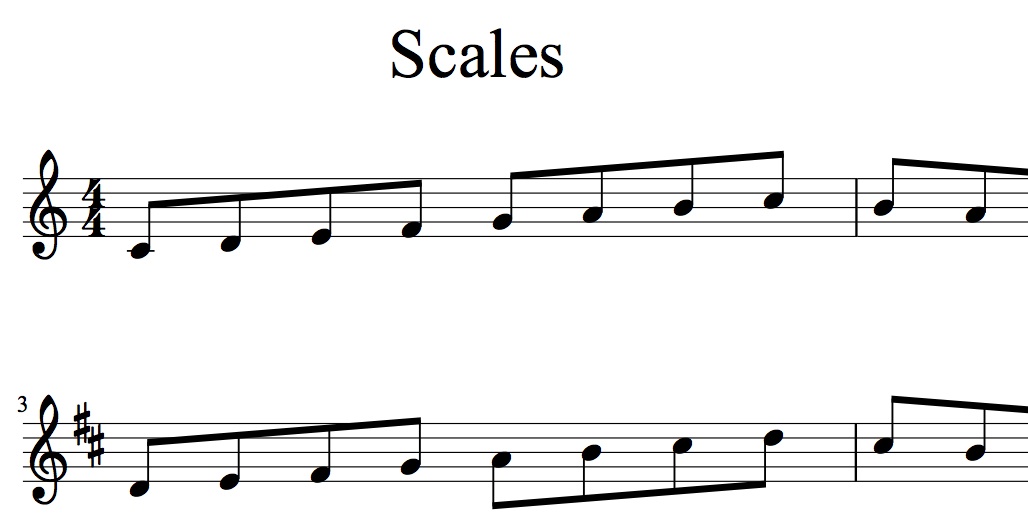
Why Should I Learn My Scales?

We have all heard this phrase many times as music educators, especially if we do private music lesson teaching.

Why do students fight so hard against learning scales and why is it so hard for them to grasp why they are important?

                                          image

I guess it is like anything in life that really isn’t that much fun, but is really good for us. Human nature is to rebel against things that do not provide us with instant joy as we want everything right now.  It takes a good deal of training and experience to realize how to achieve our goals and the tough work that lies in between point A and point B.

I try to answer the above question for students before they even ask it. I try to motivate them with the knowledge to understand that learning scales is not busy work, but provides them with the power to become the best musical version of themselves. 

Since we are in the middle of march madness, and everyone has a busted bracket at this point, no doubt, I will equate scales to free throws. Many basketball teams do not work on free throws in their practice sessions but then expect to hit them when the pressure is on. It just isn’t possible. Without that training of the basics and fundamentals, and taking individual responsibility to go through the “basic training”, the game cannot be won at the end.

The same is true in music. Without the fundamental training of scales and patterns, true mastery of music in pressure situations will never happen. There is something that happens to us when we decide to take the initiative to spend time on basics and fundamentals instead of jumping right into a piece of music. Our minds become focused, our character becomes stronger and our mastery of our craft takes on a new form. Can you imagine jumping into the Ohio River and you have never been to the pool? Can you imagine running a marathon with no training? That is exactly what happens when students jump into solos or etudes without the tools from fundamental scales first.

Of course personal responsibility is only one reason to learn your scales, but there are many many more. In fact, there are so many reasons that this post could become very long and boring, so I will just list a few that I use with my students.  I always tell my private music lesson students that they could be excellent musicians if they just practices their scales and only scales in their practice sessions.

Here are a few things scales will improve:

  • sight reading
  • tone quality
  • technique
  • range (for instrumentalists)
  • air flow and evenness in all registers (instrumentalists)
  • key signatures
  • articulation
  • volume control
  • breathing
  • rhythm
  • tempo
  • musicality
  • intonation

Do you focus on scales in your lessons and if so, what are ways you motivate your students?

Off the Beaten Path

Education done right in Richmond, Ky

Down I-75, off Exit 90, is a town called Richmond, Ky where a band program exists that is just “off the beaten path” called Madison Central High School.

image

I had adjudicated the MCHS Marching Band on several occasions for many years, and was excited about the opportunity to do some consult work with them in 2011. I had no idea the musical fulfillment, relationships, musical growth and pure joy that would evolve over the past 5 years.

They do things the right way in Richmond.

All parts of the band program are successful because of special care in each area that ensures students are receiving a top notch music education. They understand that to have a successful marching program in the fall, the concert program must be the primary focus. They understand that to have a successful concert program, they must limit the amount of “spoon feeding” and focus on creating knowledgable individual student musicians with high personal responsibility. They understand that in order to create and foster student musicians with large amounts of personal responibility, they must trust their educational process and do more than play in a band and rehearse a lot.  They are constant learners and thinkers and are humble in their approach, therefore not afraid to incorporate new ideas, some that might be scary or “off the beaten path”.

What else are they doing right?

They have a growing and evolving chamber music program that the students enjoy and thrive from. The directors are  not afraid to turn the students loose out of the main ensemble to learn and grow without a conductor.

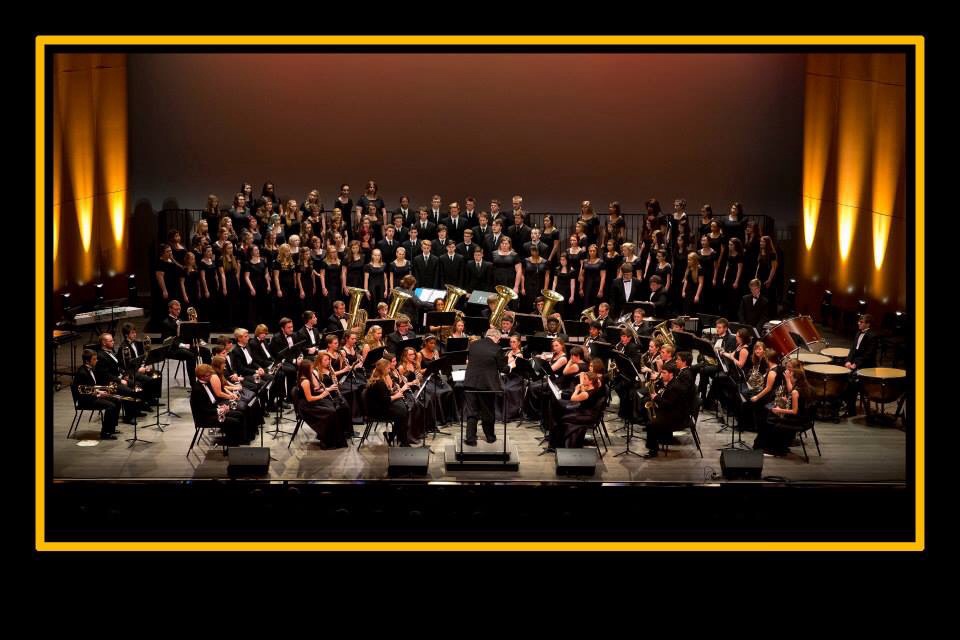
They do not over rehearse the students. In December 2014 & 2015, the Madison Central Music Department put on a concert with only 3 weeks of prep and not your typcial music concert. They partnered with the choral department and put on current arrangements, some in keys that are not common for the high school muscian, and trusted the students to do the preparation outside of rehearsal. On the cusp of a KMEA performance, they saw the benefit of performing and preparing this Christmas program, in which thousands from the community enjoyed at the EKU Arts Center.

image

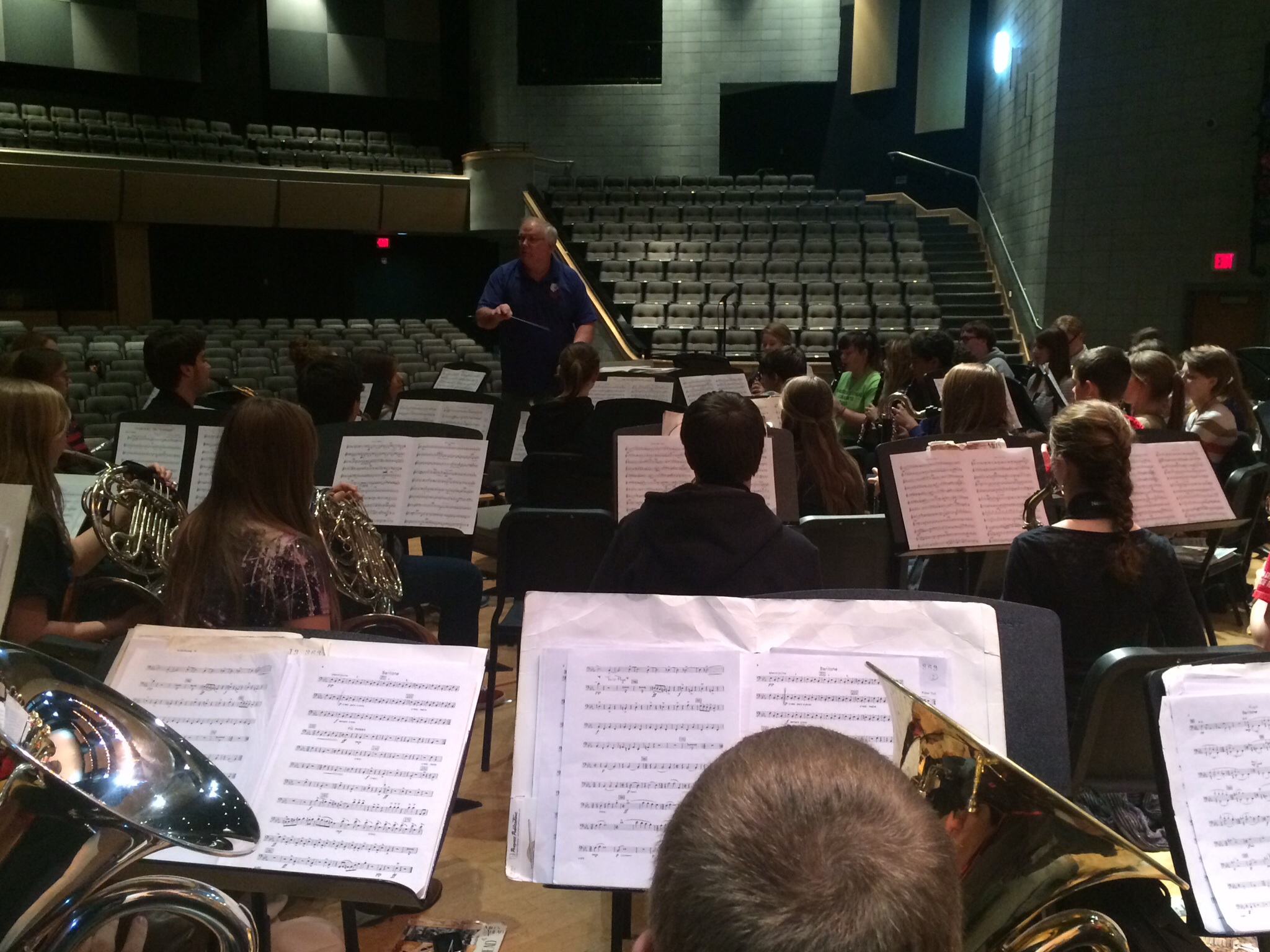
Speaking of KMEA, the 2014 MCHS Wind Ensemble performed at the KMEA State Convention on Thursday February 5, at 1:00.  They began rehearsing for this ever important concert on January 4. One month of preparation is all the students were given, and really, all they needed. The directors understand that students want to succeed, and the less chances they give them to get it wrong, the faster they will get it right. I was there 2 days before this event to witness this band rehearse.  These young musicians were so competent that there were no “high school” level comments being made. The rehearsals were about style and emotion, listening and communicating, phrasing and beauty of tone. It was a huge confirmation of what happens when music is educated and students are trusted, instead of fed with a large spoon.

image

Yes, they won the KMEA 5A State Marching Band Championship twice in a row, but that award comes from doing things the right way.  The students love the band program and thrive from the many experiences that are given to them. They love the concert program and making music with each other and they trust the staff to provide musical experiences that are unparalled at the high school level. They have passion and a huge work ethic that comes from a high level of  importance placed on each individual’s training.

image

I must also mention the amazing Directors who are never afraid to learn, ask questions and evolve and grow as musicians and educators. Both Brent Barton and David Jaggie are passionate, humble, hard working and selfless. Who knew that in 2011 from a few marching band consults, that I would be able to form relationships with two of the finest music educators in the business, and all would happen just a little “off the beaten path.”

image


I could not not be more impressed with a band program, and what these students from rural Richmond, Ky are able to accomplish with less resources than that of larger areas. Keep up the good work Madison Central. I look forward to being part of this stellar band program for many years to come. Thanks for your commitment to musical excellence.

Music Advising for your Marching Band

What are your thoughts about MCHS’s band program?