Excuses, Excuses!

What's holding your marching program back?

Each year music educators spend time reflecting and contemplating what went wrong in previous year’s competitive marching band shows and what can be done to make things better. This can be a very rewarding process but sometimes things get in the way. A professional trombonist friend of mine always used to say to me, “No excuses, just results.” This is so true in the reflection process. It’s not the ideas or reflection process that holds programs back, but rather the constant excuses.

Some of you might be asking, what do you mean?

Here are 5 common excuses that infiltrate the competitive marching season.

1. There is a problem with the judging panel!

Plain and simple, judges want to see programs succeed. While there may be a very small percentage of time where a specific judge may not be what you perceive as “the best”, or “qualified,” it isn’t the majority. A panel of 5-6 judges is put together for a specific reason and that is to give programs the best chance to have a fair and equal evaluation from many different angles. If one judge gives a program an ordinal of 2nd place and another gives the ordinal of 5th, does that mean the judge who gave 2nd is correct? Not necessarily. It means the program is somewhere in between. It could mean the judges were in different parts of the press box, and saw or heard things differently. It does not mean the judge who gave 5th is “out to get” a program. Really, there is no denying a program that is great, so if you do not want an ordinal of 2nd or 5th, just be better. Instead of looking at those placements as mean spirited, try to look at what your program can improve on as to not receive those placements in the future.

2. Our circuit doesn’t reward our type of shows

There are certain type of shows that fit certain circuits better because of the content of the adjudication sheets. Isn’t it the job of the directors and staff to pick a show that has music and effect according to the criteria in which the program is judged? Instead of using this excuse, reflect on why the show might not be doing as well as hoped, and make necessary changes that are guided by that circuits judging criteria. Study the sheets and present a program that guides the adjudicators through those sheets in a very organized manner.

3. We drew a bad spot at contests

This one does matter slightly, but again, being great is hard to deny. Trust that the adjudicator is competent in being able to recognize and reward greatness, and be amazing as the first band. It is when bands are in the “just ok” area that going first has a bigger impact. Make a statement with tone quality, musicianship, performance, confidence and appearance and programs will almost always get the credit they deserve.

4. Other schools’ shows are so much easier than ours

Placing blame on other programs and focusing on what someone else is or isn’t doing is a big mistake. If another program is doing better than yours, it is usually because that program is performing on a higher level. Whether it is perceived as easier or more difficult really doesn’t make that much difference. It is the performance quality of the material that the director has given their program. Sometimes, other programs might appear easier because they are performing it with such ease that it comes across effortlessly.

5. It’s political!

This is a very popular statement, and has some merit. However, being undeniable in what you are doing can trump any political stereotype. It just takes one or two unbelievable performances for any preconceived notions to be broken. It is hard to deny greatness. Is your program great?

Focusing on ourselves, being humble and working hard are the only things we can control. Wasting mental energy on anything else takes our focus off the main thing, which is high level music education. Try a whole season of no excuses and quite possibly you may see what is holding the program back.

Is there another excuse you have heard during the competitive marching season?
How are Music Programs Defining Success?

We as music educators love the time of year when district auditions, all-state auditions, honor band/orchestra auditions and solo and ensemble festivals happen. It is a time to socialize with other educators and watch the students grow from each varying musical opportunity, right? Well, not exactly. While networking and education are important, it seems the main importance are the numbers! The number of “ones” or “golds” on solo & ensemble, or the number of kids that auditioned and made all-state. The number of students that auditioned for district band or the number of students that made the “top group.” The list goes on and on.

I have seen this taken to the extreme with emails circulating comparing the different schools in an area with how many students auditioned and made different groups. Directors give young musicians “days off” of class to have individual practice days to work on the audition material. They have each student play privately for them after school (when this would have never happened otherwise) and even make  their own ensemble audition material  the same music. Many students are convinced and coerced to audition to “help” the numbers. I have seen legal pads with names written on the page with check marks as a way to keep track with how many students are auditioning or participating. It all seems like too much energy spent on things of little importance.

What if the same energy was spent on educating students about the high level extra curricular programs in the area, or convincing or coercing students to sign up for a field trip to the symphony or to hear a masterclass by a professional musician.

Do the amount of students that make all-state define a program or director’s success?

Sadly, I believe for many it does. It is a way that a director can appear a really great educator on the surface. Music programs appear successful and thriving from students auditioing. Students making all-state or district programs doesnt say much about the music program, however. While the student, director, private lesson instructors and parents should be congratulated, these things do not define success for music education in that program. It is one audition or test.

What is a better way to define success?

That is a great question.

  • The students’ ability to sight-read and understand music on a deeper level by knowing basic music theory and aural techniques.
  • The students’ ability to feel and create emotion from music through advanced phrasing and shaping.
  • Creating and fostering a love of music education in students through deep thought about daily educational experiences provided.
  • The students’ awareness of what steps to take to be more like professional musicians.
  • Students playing and performing regularly a wide variety of music in varying size ensembles.
  • Giving students opportunities to perform solos and ensembles without a conductor.
  • Giving students practical information that can be applied both now and in the future. Caring less about the test and more about the process. Schools do the same thing when comparing standardized test scores from school to school. Is that one test a definition of succcess for that school?

I am not saying that auditioning for these programs is not a good thing, and I am certainly not saying that directors who ask students to audition for these programs are doing the wrong thing. I am simply saying that there is a problem with how some music programs are defining success if it is based on numbers involved in these programs. Students should be presented the opportunities, and then should be able to make their own decision about auditioning or participating. We should care more about the process and less about the “test.” Instead of sending emails about numbers, maybe send emails inviting other educators to come check out a chamber ensemble concert or come to one of your many performances. Or send an email or newsletter discussing different educational methods and asking for ideas from others. It will soon be evident through observation what program/director is most successful.

How do you define success in your music program?

Do Kids like your Class?

I think we as educators would all agree that kids are much different these days than even ten or fifteen years ago. When I was in high school, in the early 90’s, I would sit in band class in awe of my amazing band directors. I took their word as the law and never questioned WHY I was being told to do something. My music teachers sat on a large throne in front of the class and were the kings and queens of band. They waved their white baton around so proudly and purposefully and we knew they were the conductor, and we were the students. The band director/conductor in those days were untouchable and hard to approach. Music lessons consisted of contest solos, method books and auditions.

Times have changed since then for sure, but how?

The experience for the student is much more important and vital than it used to be. Now, students will quit because they did not have “fun” in one lesson or class. Students are tired of being victims of emotionless lectures and experiences and they want their instructors to show love and care in their lessons. They want to learn practical information that they can apply immediately. They want to be entertained and feel something from each session. They want to be able to walk away from a class or lesson and tell their friends something new and fresh that happenend that day.

The student wants to know HOW and WHY and to feel very deeply that the instructor not only knows the information, but is confident, professional, an expert and is helpful. The days of the conductor being “God” in a mach turtleneck and a sportcoat are dead. The days of lifeless classes with no other purpose than to just present information are gone.

Do kids like your class?

What are you doing to show individual students that you care about them? What are you doing to help kids understand the information beyond just tellling them? Are you presenting information on different levels for the different learning syles? Are you helping the individuals be the best version of themselves by providing creative and practical ways to present information?

If you answered no to any of those, you are not alone. It takes passion, energy, creativity, initiative, forward thinking and most of all self reflection to evlove with the times. What does this look like for you? It depends on the type of class and type of students, but here are two ideas any music educator can incorporate:

1. Make time for relevant music to young students

Kids start playing an instrument for many reasons, but the answer I keep hearing form the majority of young students is: “I want to play fun music and music enjoy playing,” We all know that the classic band pieces and solo pieces have their place in education, but adding some time for pieces that students enjoy might just be the way to keep their trust, attention and help them improve. It might just knudge the student to start practicing!

2. Remove the music altogether

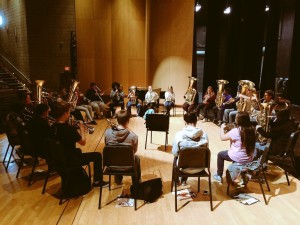
WHAT? Yes. Take time for communication between musicians without any music in front of them. Take time for improvisation. Do you know, most students have never had the oportunity to play by ear or create. Since the day they started playing the instruments, they have been given music and rules to follow. It is amazing the first time I begin this experience with students, they ask: “What do I play?” They are so used to rules and being told what to play, their creativity and musicianship is stifled. Take some time to improv together, and maybe even program a piece on your next concert that has no music. Below is a recent rehearsal I had at Madison Central High School where we removed the music and created a work of art through improvisation.

open back wedding gowns NZ

Take care and pride in the students you have been given, and look closely at what makes them tick. How do they learn? Help each student be the best version of him/herself and start seeing radical results.

Have you incorporated new and fresh ideas into your music classes?

Well-trained vs. Well-rehearsed?

An insight into the differences

Can you tell the difference when listening to a student or an ensemble, or watching a winterguard that is well-trained vs. one that is well-rehearsed? Is there any difference in the end product?

Do the students get the same level of education with each philosophy?

When judging different events during the year, I always ask myself the question: “Is this group/student well-trained or well-rehearsed, or both?” There are many similarities but the differences are glaring to educators who have their philosophies wrapped up in the “main thing.” So, which one is right? Which one is the most beneficial for the student? Is one better than the other?

Well-rehearsed groups/musicians can play a piece of music very well and can perform and execute at a pretty high level. They have been rehearsing the music/routine for the performance for many months and “have it down” thanks to the instructor who has spent countless hours rehearsing them. They spend less time rehearsing basics and fundamentals and more time rehearsing pieces for performances. They go through the motions without thinking much as the rehearsals have become routine. The performance goes well, but not spectaular because of how performance based rehearsals were. When groups/musicians focus solely on being well-rehearsed, it puts more emphasis on the outcome instead of the experience. The performance can lack energy and emotion.

Well-trained groups/musicians spend more time learning basics and fundamentals and less time rehearsing pieces/routines. These groups/intructors spend more time discussing why and how the “what” operates instead of just the “what” itself. Each rehearsal is a new learning opportunity that keeps students engaged in the musical process placing emphasis solely on daily education instead of the final outcome. When groups/musicians focus solely on being well-trained, it puts less emphasis on the outcome and more on the experience. The audience in turn will feel more emotion and energy from these performances.

Is there a happy medium?

It is my belief the most beneficial option for the student is to be well-trained through expemplary teaching, and rehearse enough for the training to shine. Be confident in your ability as an educator and the students’ ability to learn and grow from what you have to offer. Try to put more responsibility on the student to take the education to the next level on their own, coupled with interactive, motivational, intentional and thoughtful education from YOU the educator.

Do you have thoughts about well-trained vs. well-rehearsed?

hair chains bridal hair accessories


Keeping Student Musicians Engaged

Varying musical experiences to add variety

Why do we educate young musicians? What is the philosophy behind our daily routine? I think so often we meander down the same hallway or drive the same drive to work stuck in a rut that is driven by habit instead of intention. Why are we actually doing what we are doing and how is it benefiting our students. . . .and us?

We have the same schedules, the same concerts and the same educational experiences everyday which in turn can drive us to be complacent and bored. If we as educators become bored and tired then most certainly the student will reflect the same feelings. I think we can become stale and sterile in our techniques and offerings without even knowing it. Life gets in the way. We get busy and pushing the limits educationally takes time, mental energy and further education. Then we think these thoughts to ourselves . . . .”I wish I had a better studio,” ” I wish I had more students,” “I wish I had a more successful band program,” etc. Well, there is a way but doing things the same way over and over and expecting different results is the actual definition of INSANITY.

It can be scary to think that if we spend less time working on concert literature and offer more varying musical experiences, our students will actually be more proficient at the concert literature. Let me try to explain.

For example: Most band directors rehearse their band music over and over and also add after school rehearsals because they cannot quite get the music learned in the time alotted during the school day. The problem is not the time, its the engagement of the student. Because the student is bored with the same thing over and over, they are engaged less than 50% of the time they are in rehearsals. Because of this, it takes 50% more rehearsal time and drives the director crazy to get things accomplished. The same can be true for private lesson instructors. Because of the recitals and exams, teachers feel pressure to teach for the test and the student becomes bored and lacks enjoyment practicing the material. Adding varying experiences to your daily educational routine will provide more enjoyment, more variety and keep the brain engaged and growing. The concert material will improve faster by spending less time working on THAT specific material. That is hard to believe I know. . . .but it’s true!

What are the varying experiences?

They are different for each instructor and each situation but it could look like the following:

1. Creating a chamber ensemble program that thrives and works as consistently as the actual band. These experiences can happen certain days of the week during the band class to break up the “same old” band rehearsal, and to provide new sight-reading experiences and enasembles without conductors.

2. Implement improvisation into private lessons and/or music class. It doesn’t neccessarily mean jazz improvisation, but getting the student to be more creative and learn to bring the passion and musicality out without being “stuck” behind the page. Let them learn the fun and excitememt from creating their own musical product.

3. Bring professional players in to work with your students. Do not be afraid of not knowing everything, or not be able to provide your students with everything. Showing humility and knowing weaknesses will help strengthen the core program by filling those voids. One cannot be expected to be proficient on every instrument. As a music educator, give your kids the opportunity to learn from the best players that are actively doing it on a daily basis. Have those players work with your chamber ensembles, do masterclasses and get students excited about the possibilities on their instrument.

4. Take field trips to hear professional concerts. Get your students excited about all different kinds of music. Talk to them about the experiences and why you feel the importance of each trip. What are you trying to gain by the experience?

5. Perform more often and more music with less rehearsal. Make the students (and the educator for that matter) feel a bit uncomfortable with the lack of “spoon-feeding” and put the responsibility on the student to do well because of their individual responsibility.

6. Take a day out of class for a performance day. Have students prepare solos, or bring in a CD they love and let them talk to the class about what they love about it and the history of it.

Think outside the box. Enjoy the daily education with your students and the possibilities are endless.

These are just a few experiences but each requires just a bit more thought. Each requires the educator to take a different daily route, to self educate and be more prepared.

Do you have another experience that might be great to implement as a music educator?

long formal dresses shop online

Keep the Main Thing the Main Thing

This is the time of year when music educators start getting stressed about upcoming performances and marching band competitions and rehearsals get a bit chaotic and stressful.  As these performances draw closer, let’s remember the phrase author Stephen Covey made popular in his book The Seven Habits of Highly Effective People. Keep the main thing the main thingMusic Education!

We are in the business of training young musicians to be intentional about their music making. We are also in the business of instructing young musicians to be proactive with their thought process in their individual practice and in group settings. If we are attempting to be successful in our upcoming engagements our rehearsals should be even more focused on the main thing which is educational thoughts and training young minds to engage.

Being more intentional about spending daily time teaching fundamentals, technique, tone production, articulation, etc. will actually help the overall product be more successful without spending time on the actual product itself. Its scary, however. It is our nature to get stressed and feel pressure to make sure the product is perfect for an upcoming performance. What we end up doing is trying to think for the students, which makes them engage even less. Why do they need to think when someone else is doing it for them.

Keep the main thing the main thing.

What is the main thing? We are in the business of helping young musicians be the best versions of themselves. Plain and simple. The challenge is making sure we are continuing down the road of education and thoughtful intent instead of rote teaching out of fear that the students will not acheive what we are asking in time to be successful.

I have heard many times from music educators that they start out with great fundamental training, especially in the marching arts, but as the season progresses they just do not have time to work on the fundamentals of playing any longer. It seems logical, and I have certainly fallen into this trap in the past. If you move away from educational thoughts regarding fundamental playing and breathing what are students thinking about while playing? Probably nothing. The harder the season gets, the more relaxed approach and educational thoughts young musicians need. If young players have thoughts of intent always on the front of their brain, we will not need to rote teach as much.

The harder it gets, and the closer those big shows get, take more time to keep the main thing the main thing. Keep giving your young musicians daily vitamins to keep them healthy! Keep them on the path to success through intentional educational thoughts pushing them to be a more advanced version of themselves. The results will be beyond your wildest dream.

Do you find it difficult to find time for the main thing when important performances are approaching?

grey bridesmaid dresses


Tuning an Ensemble

3 common mistakes to re-think

We all want our ensembles to play better “in-tune.” We spend countless hours rehearsing and waving a tuner in front of our students trying to get that perfect pitch on a concert F or Bb. Why isn’t it working?

When students tune on a tuner, why do they still sound out of tune?

Here are 3 common problems I have encountered when spending time with different band programs.

1. The one note tuning process

This is probably the most common mistake.  Directors walk around with a tuner and say to each student “you’re sharp – pull out” or “you’re flat – push in.” What are we attempting to do with this process? It takes so much time and all to get one note to sound better. Instead, spend time helping students find the center of the characteristic tone with adjectives they can relate to and thoughts they can have in their head to achieve a more centered sound. Before going to the tuner, the first step should be getting a characteristic tone. You cannot tune a tone that is flat or sharp. If you try to do this, you will have a bad sound that registers in tune on the tuner, but will never resonate or project, and will always sound out of tune. The tuner should be a reference point after the tone is improved to make sure the student’s tuning slide is somewhat in the right position. A student can be “in-tune” on the tuner but still be sounding out of tune. Spend more time educating students on some helpful thoughts they can have going through their head to get to the core center, as well as teaching note and chord tendencies. I like to use: clear, centered, colorful, resonant and projection when teaching students to improve their tone and intonation. I ask them to think of certain colors to get to the center of the sound. They should also be listening to professional players to have a sound other than their own in their head.

2. Listen to your neighbor

In a world where your high school players are all playing at a professional level, this is a great thought, and the students should listen and blend, but what if their neighbor is -20 flat? What if the two people next to them have less than perfect tone qualities? When tuning each person, focus first on his/her best characteristic tone, without going to the tuner. I am certainly not saying this is not warranted, but the individual tone should be the biggest concern, and some very specific educational thoughts should be going through the young musicians heads before simply “listening to their neighbor”. When is this helpful? As the tone improves and as the ensemble matures but not as a complete means to get an ensemble “in-tune.” Instead of listening to just the neighbor, try to educate the students to focus more on listening to the way the notes fit in the chord and teaching the tendencies of the way notes respond both in the chord and with the specific instruments. Hear the waves of the way notes respond across the section/ensemble. Try having them listen to other individuals in the ensemble, and asking specific questions related to tone and pitch. Each question posed to your ensemble will help them think, and using others as an example can be helpful to all. Be a great player and play for your students. Sometimes just hearing it can produce amazing results. Students should always be aware of every musician around them, but not wrapped up in only their neighbor.

3. Tuning on the zero

I have found that most young musicians play flat. Simply put, the embouchures and air quality of younger players are not developed enough to produce a tone that is consistently in tune. Even when students are taken outside into the warm weather in the summer months, the sound of the band sounds flat even though the pitch rises. This is again because of the lack of focus and attention on a centered tone. The colors of instruments lie just above the zero on the tuner. It is more offensive to play under the pitch on the flat side, than missing just on the sharp side. When tuning try giving the student a bigger room to tune. I like to tune students somewhere in between the zero and +10 on the tuner. Beautiful bright colors will begin to resonate in the students tone (assuming they are first playing with a beautiful characteristic tone).

The philosophy that drives these suggestions is very detailed music education. I believe very strongly to work for higher level thoughts for young students. They are waiting for education that explains the WHY and the HOW of things. We mistakenly commonly say other phrases like “faster air” or “fill up” or “play to the crowd” without telling them HOW to do it. Think about how these phrases might sound to a young student who knows very little about music? HOW do you make your air faster? HOW do you fill up?

In your education have you heard or used these phrases? What higher level thoughts do you use in your own playing or teaching?

Place Less Emphasis on the “Test”

Now is the time to educate

It is safe to say that most if not all music educators want to be successful and have successful students. There are so many things that drive our schedules and our methods that we can become easily distracted. Marching Band competitions, rating festivals, student progress tests, band festivals, recitals, and the list goes on and on. In the midst of preparing for these events are we leaving time to educate?

I am convinced that in order for a student to be successful they need to  be passionate and have a teacher that is driven by educating, motivating and fostering that passionate student to be the best version of him or herself. All students are different and the needs vary from person to person. In order to get down to helping one succeed we need to understand that students are not numbers but real people with real needs.

Yes, there are certain standards and certain knowledge that we should strive to make sure students know and understand. I am certainly not saying we should not teach what is necessary, but I am asking the question, “Do we teach what the student needs, or to a list we have been fed through music school?” Does a young piano student that has an ability to compose and improvise need to spend most of their time learning Beethoven Sonatas? Yes, that is relevant and Beethoven’s place in music history is very important, but what will help evolve this student and build into his or her creative being?

Take time to care and take time to educate. 

It is as simple as that. Care about the people you are working with and educate them with information and a process that will stir up a crazy amount of passion.

Why do we teach to the test? Why are we so concerned about our “end of the process” assessment? Does it have more to do with us than our students. We sometimes don’t like these hard questions. Change is hard and it requires us to look at ourselves and swallow our pride.

Here is the thing. I am 100% convinced that if we take time to educate, take time to care and place emphasis on training young musicians that have thoughts running through their head when performing and practicing, we won’t need to worry about the test. That will take care of itself. The reason we are so concerned about the test is because we are trying to create some sort of magic or wizardry with our students when they haven’t been trained, motivated or educated to the fullest. We take time to worry about the overall product without taking time to develop the individual.

Take time to learn about the students. Do you know what drives them, what they like to do in their spare time and when their birthday is? People that feel important and included are more likely to enjoy the process and be open to the information presented to them. Help students build great character and foster their passions and abilities while giving them the necessary information.

Have you had a passionate, motivational teacher that made a difference in your life?


Marching Band Score Editing

Setting your kids up for success

With marching season upon us there are so many things to do and plan for. The music is being arranged, drill is being written and visual concepts are being finalized.  The planning process is extremely important in order to set your student musicians up for optimal success as we begin camps, but

Is there one step that you may be overlooking?

Many directors put a plan in process, choose music and have the music arranged for their ensembles by professionals that are excellent at what they do. This is certainly the first step to having a great product, but what many miss in the process is looking at the score and asking themselves, is this product exactly right for what will be successful on the field for my ensemble. Am I taking care of everything on the planning end so the final product will not cost the students in the end? Sometimes we blame the students for problems they cannot control.

The score editing process is one many overlook in the many stages of planning.  An arrangement that is written for your ensemble most likely has many issues that cause your students to have inherent problems on and off the field. This will also cause problems in the judges scoring because of what the kids can actually acheive. It is very important to have someone really comb through the score measure by measure so that a clean product can be presented to students at the start of the season. The beginning product needs to be free of issues that always cause directors to “pull their hair out” throughout the season.

Here are some problems that need to be addressed in order to present a product that can and will be successful from the very beginning of the season, without spending countless hours trying to rewrite and redo things throughout the season.

1. Pacing issues

When judges are looking at a show for the first time, they want to feel the show’s emotion and musicality without having their interest interrupted by segments of the show that are like run on sentences.  Judges are much like spectators. They want to be entertained. They want the show to move along and take them through a storyline. Much like a “slow” movie, if things do not move quickly, and present new ideas, we become bored and begin looking for things that are wrong. In order to score well, the judge cannot be bored. Also, how will the musical pacing work with the visual design? Am I giving the drill writer enough time to get his/her point across in a very innovative way?

2. Construction issues

Much the same as pacing, constuction is looking at how each section is incorporated in the show and how they fit in with each other. If 3/4 of the opener is woodwind contribution because your band has a strong woodwind section, the communication of the musical intent is not helping because of the one timbre that runs too long.  Along these lines there might be too long of a percussion feature without giving the ear another tidbit of music to spark an interest.  What about the way the opener feeds into the ballad and how we want to build a strong foundation to be ready for a nice slow down.  Are the introduction, plot, climax and resolutions in the right spots to feel secure in our story telling?

3. Rhythmic issues

There are just some rhythms that do not work on the field even if you have the best marching band in the country. The time is simply not there to rehearse things to death that most likely will not improve very much. Our time is so precious in the high school marching activity. It is imperative that rhyhthmic issues are looked at before passing your product out to your student musicians. Syncopation is an example of a rhythm that generally presents problems. I am certainly not saying you cannot use it, but how does it fit in with the other instruments, how much time do we have to rehearse and what tempo are they expected to master it? It almost certainly drags when being attempted at quick exciting tempi. Certain 16th note passages just for the sake of being flashy, or triplets that could be written as eighth notes.  Think about what is going to give your student a 100% chance to be 100% successful 100% of the time.

4. Breathing

Where do your kids breathe?  Breathing in the sport of the arts is the number one priority.  Students cannot be successful without proper breathing and time to take the proper breath. The score must be looked at from the standpoint of giving the musician the best opportunity for success, especially when we want to have very emotionally stirring big sections of the show.  We have all heard directors yell “louder”, “dont give up”, etc. Most of the time it is not because the students are not trying, they simply have not been given the opportunity to be successful.  They have nowhere to breathe.  I have also heard directors say “stagger your breathing.” While this is needed sometimes, unless very thorough attention in rehearsals has been done to show students where to “stagger,” just saying it will never happen.  Places for group breaths, and building breaths into each section strategically is a very large priority.

5. Dynamics

This is probably one of the most important things that is overlooked. Many arrangers write very surface dynamics in the music like f, mf or ff, but what about the in between where the music can be found.  As stated above, students need to be able to breathe, and adding dynamic interest is one way to add hidden breaths without really knowing they are there.  For an example, the bottom of a sfzp crescendo can allow a student to sneak a breath before coming back up to the large dynamic. Also, in order to score well in the music effect category we have to be very strategic at looking at what is the most important voice that needs to be heard, and add dynamics that will help this to sound like it should on a first or second reading. We want the score to be very transparent and basically spoon our intent to the judges. Not only these things, but having a clean score with very specific dynamics so the percussion writing can be written as a reflection of this.  Many bands have percussion sections that sound like they are doing one show, and the winds are doing another. Most likely, the percussion writer received a score with little to no dynamic editing.  The percussion writer needs to write very musically and know if he/she is writing with the woodwinds, or with the brass and how the battery and front ensemble fit into the overall product. This cannot be overlooked.

The one phrase that should be over every one of these categories is, “What can my students achieve and what allows them to be 100% successful 100% of the time. How many times have we said “I hope this section of the show goes well”. There should be no hope but confidence in the product given to the students that WILL allow success. No matter if you have a “young” band or a very mature ensemble, there are certain things that you can do before the season to make each sound and look mature and professional.

Choose a professional musician, possibly one who has done some marching arts adjudication, to look over your score and work with you on what will allow your students to be successful. Plan ahead so you do not waste time later.  Be proactive in your students success so you do not have to blame them for problems they cannot control later. Ask for help!

Do you use a score editor? If not I would be happy to help you look into this for your ensemble. Please contact me with any questions you may have regarding this process.

Band Directors are CEOs

It is hard to believe that after many years of school to become a music educator, a band director WILL become a businessman or woman, but that is exactly what happens. In band programs today, the budget and personnel that a music department operates with is not unlike that of a large corporation. In order to operate smoothly and successfully the head director must be the CEO and implement great business skills to have the company run smoothly and successfully.

What does that look like in a band today?

1. Hire the right people

Just like any successful business, it is important to surround yourself with team members that will be team players, are highly motivated, humble and not self serving, and are the best option for the task at hand. Far too often, there is not enough of a “hiring process” when staffing a successful band program. How smoothly do I want the program to run and am I getting the best product for the money?

2. Know how to manage money

How do we spend the money we have that will allow the program to run the smoothest.  In a world where we buy what we want, when we want, there is little thought to if it is really neccessary and if it is the best thing for us.  Far too often, I hear band directors say “we just don’t have the money for that”.  While that may be true, where is the money being spent, and is every dollar going for the sake of education and what is best for the musicians?  For example: Look for the best deals on instruments, instead of paying retail. Do we really need a brand new mat for our winter programs? Could we compete closer to home? Are these new uniforms necessary, or are the ones we currently use working ok? Are we really ready for Bands of America, or should we improve our overall product first?

3. Be a great leader

Be humble, be a servant, be intentional, be passionate.  The team members of an organization will only perform to the level of the leadership.  Have regular meetings with staff and the organization. Let them understand the educational goals of what is attempting to be accomplished.  Be someone that has an infectious work ethic and empowers everyone around to be better people.  Study how to be a great leader and what that looks like in the business world.  Be a constant reader and studier of the world’s best business people and how they are able to grow, market and run a successful organization.

4. Learn when and how to let people go

Not always are people a right fit.  Too many times people hire their friends to work in a program and it just doesn’t work out. What happens next? How do you let that person go.  A “partnership is the only ship that wont float,” says Dave Ramsey, a high powered entrepeneur and businessman. Ask yourself, “do I have the best staff, with the most intense work ethic, excellent leadership qualities, and master educators? It is ok to let people go and move on to another solution to what is best for the program, finances and most importantly the education of the students.

5. Be an effective salesperson

Too often, the numbers of a band program suffer because the lack of intent on being able to sell the students on band.  Simply put, we have to learn to communicate our product with potential buyers.  In the professional world, most people do not find work waiting for the phone to ring.  You have to leave the cave and drag home dinner. Learn to go after what you want and be able to show potential students why this is right for them.  Do not be afraid to leave the office and sell face to face.

6. Don’t micromanage or try to do everything yourself

Trust the folks you hire to do the job you need done.  Most band directors do not do much band directing.  Yes, they still conduct the band, and lead the program, but the percentage of time spent  educating becomes less and less as the program grows.  Be a motivator and place people in your program who are talented at their craft.  Teach others what is expected and watch them be successful in their positition.  They are a reflection of you.

Check out Dave Ramsey’s book Entreleadership for a good read on how to run a successful business.

Are you a director running a program?  Can you relate to being a CEO?